Fed Cuts Rates Amidst Internal Divide, Hints at Pause
The Federal Reserve has enacted a quarter-percentage-point interest rate cut, bringing its benchmark overnight borrowing rate into the 3.5%-3.75% range. This move, anticipated as a "hawkish cut," was met with internal division, evidenced by three dissenting votes – the first such occurrence since September 2019.
Internal Divisions Surface in Rate Decision
The Federal Open Market Committee (FOMC) saw hawkish and dovish viewpoints clash. Governor Stephen Miran advocated for a more aggressive half-point reduction, while regional Presidents Jeffrey Schmid of Kansas City and Austan Goolsbee of Chicago preferred maintaining current rates. This divergence highlights the ongoing debate between prioritizing inflation control (hawks favoring higher rates) and stimulating the labor market (doves seeking lower rates). Miran's dissent marks his third consecutive opposition to the committee's decisions, and Schmid's second. Notably, the previous meeting with three dissents also featured a split regarding the balance between tighter and looser monetary policy.
Forward Guidance Signals Cautious Approach
Following the rate adjustment, the Fed's official statement echoed language from the December 2024 meeting, indicating a careful assessment of incoming economic data, evolving outlooks, and risk balances when considering future policy adjustments. This phrasing, used a year prior, preceded a period of no further rate reductions until September 2025, suggesting a similar pause may be on the horizon.
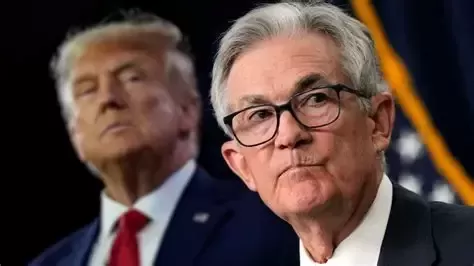
Federal Reserve Chair Jerome Powell emphasized the Fed's current "comfortable position" regarding interest rates, stating, "We are well positioned to wait and see how the economy evolves." He described the current rate level as being "in the high end of the range of neutral." While acknowledging three consecutive cuts, Powell deferred decisions on future actions, reiterating the strategy of observing economic performance.
Economic Projections and Market Reactions
The stock market responded positively to the announcement, with the Dow Jones Industrial Average gaining 500 points and Treasury yields generally declining.
Looking ahead, the FOMC's "dot plot" projection for 2026 and 2027 indicates only one rate cut in each of those years, leading to a longer-run federal funds rate target of approximately 3%. These projections remain consistent with September's update but underscore the internal disagreements about the future path of monetary policy. The dovish dissents were further amplified by four nonvoting participants registering "soft dissents" and seven officials indicating a preference for no rate cuts in the upcoming year. Powell acknowledged the robust and respectful nature of the committee's discussions, despite differing strong viewpoints.
Economic Growth and Inflation Outlook
The committee revised its GDP growth forecast for 2026 upward by half a percentage point to 2.3%. However, inflation is still projected to remain above the Fed's 2% target until 2028. The most recent data available shows the Fed's preferred inflation gauge at 2.8% annually in September, a significant decrease from its peak but still considerably above the central bank's objective.
Fed to Resume Treasury Security Purchases
In addition to the rate decision, the Fed announced it will recommence buying Treasury securities, following its October decision to halt the runoff of its balance sheet. This move addresses concerns about liquidity pressures in overnight funding markets. The central bank plans to initially purchase $40 billion in Treasury bills, with expectations of elevated purchases for a few months before a significant reduction.
Navigating Political and Operational Challenges
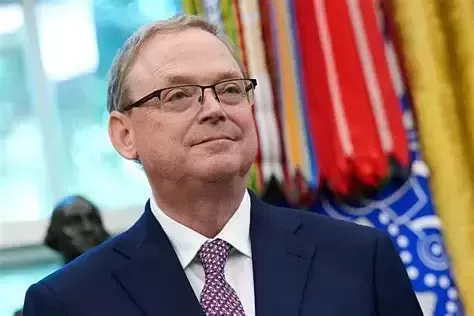
These policy adjustments occur at a critical juncture for the Fed. Chair Powell is nearing the end of his second term, with his successor to be appointed by President Donald Trump, who has indicated a preference for lower interest rates as a key criterion, potentially diverging from the Fed's dual mandate of price stability and full employment. National Economic Council Director Kevin Hassett is currently the leading prediction market favorite to be nominated.
The Fed has also been contending with significant data disruptions due to a recent government shutdown. While official data has been delayed or unavailable, the labor market has shown signs of resilience with low hiring and firing rates. However, unofficial data suggests an increase in layoffs, with announced job reductions exceeding 1.1 million through November.