China's Two Sessions: Growth Targets and Stimulus Plans
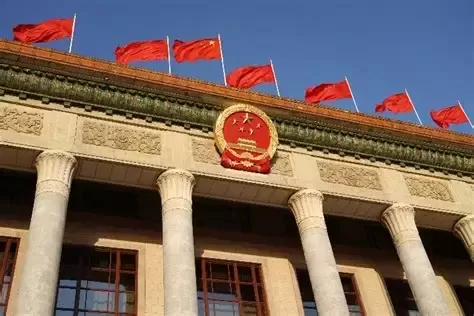
China's annual parliamentary gathering, known as the "Two Sessions," is set to commence, with policymakers poised to unveil crucial growth targets and economic stimulus plans for the year. The proceedings begin with a consultative congress on Wednesday, followed by the National People's Congress (NPC) on Thursday. During the NPC, Premier Li Qiang will officially announce a suite of economic objectives, many of which were pre-determined at a December meeting.
Beyond immediate economic goals, this year's parliamentary meeting is anticipated to reveal the specifics of China's new five-year development plan, marking the fifteenth such program in the nation's contemporary history. Investors will be keenly observing for insights into Beijing's strategies for achieving its ambitious domestic technology objectives. These goals are a significant stepping stone towards China's broader 2035 vision, with a pronounced emphasis on technological self-reliance. Senior Chinese officials, including top diplomat Wang Yi and leaders from economic and financial ministries, are expected to address the press throughout the Two Sessions, which typically span about a week and are scheduled to conclude on March 11th. It's worth noting that Asia Society analysts have indicated that China's ongoing anti-corruption campaign has led to a reduction in delegate participation at this year's Two Sessions.
Economists are anticipating several key announcements from Premier Li:
Expected Economic Targets
GDP Growth: Projections hover around 4.5% to 5%. Several provincial governments have already adjusted their growth ambitions downward for 2026, suggesting a similar national target could be adopted. If the target falls below 5%, it would represent a historic low, a decrease from the "around 5%" seen in recent years (excluding 2020 due to the pandemic). Economists at the Economist Intelligence Unit suggest a slightly lower target would allow policymakers more flexibility to focus on structural reforms and enhance data accuracy, with a prediction of 4.6%. However, Morgan Stanley analysts consider a lower target unlikely, noting that Beijing often sets ranges during periods of economic stress. They also highlight that 2026 initiates the 15th five-year plan, which necessitates robust growth to foster confidence.
Inflation: An inflation target of approximately 2% is widely expected. This figure is generally viewed as an upper limit rather than a precise objective. A 2% ceiling mirrors last year's target, which was the lowest in over two decades and signals Beijing's acknowledgment of subdued domestic demand. For the entirety of 2025, price growth was stagnant, and 0.7% excluding food and energy, reflecting persistent softness in consumer confidence. The National Bureau of Statistics recently announced an adjustment to its consumer price index methodology, giving greater weight to services compared to the previous 2020 base period.
Budget Deficit: A deficit target of 4% is anticipated, aligning with last year's figure. This level signifies a notable expansion in government spending relative to GDP, marking the highest on record since 2010, surpassing the previous high of 3.6% in 2020.
Underlying Economic Pressures
The forthcoming policy announcements will be closely examined for details on consumer stimulus measures, such as expanded trade-in subsidies, and any further support for the beleaguered property market. The Two Sessions are also expected to offer insight into Beijing's perspective on the ramifications of U.S. trade tensions and the ongoing conflict in the Middle East.
China's economy continues to grapple with significant domestic challenges. Logan Wright of the Rhodium Group observed a growing divergence between official targets and economic performance data, and the actual capacity of Chinese policymakers to stimulate domestic demand with their available tools. Wright further pointed out that China's financial system is heavily channeling funds into less productive local government entities and state-owned enterprises to prevent their collapse. This fiscal spending is largely channeled through these same institutions, resulting in diminishing returns on investment and economic activity for equivalent lending or spending volumes, while private sector investment remains sluggish.