
Panipat's Textile Recycling: Health and Environmental Toll
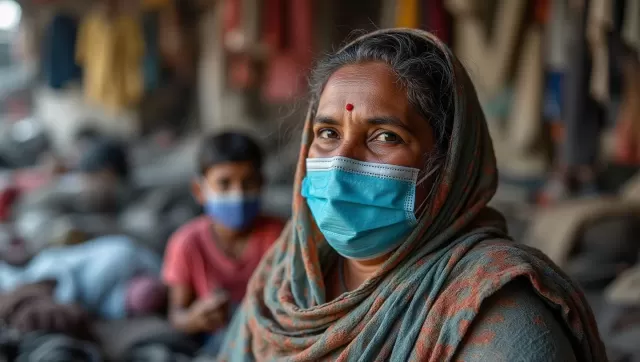
Panipat, a city in northern India, has earned the moniker "castoff capital of the world" for its immense textile recycling operations. Within its humming factories, a pervasive lint-filled air coats every surface, a constant reminder of the industry's unseen toll. Neerma Devi, a 27-year-old worker, navigates this dusty environment daily, her face masked, yet still battling the fibers that irritate her skin and constrict her breath. The clothes she processes, once discarded from Europe, North America, and East Asia, are transformed here into yarn for rugs, throws, and other home goods destined for global markets.
Devi's move to Panipat with her husband was driven by the promise of steady work. Now, six days a week, she toils, sometimes with her young sons nearby due to a lack of childcare. The very materials she recycles are making her ill, leaving her with a persistent cough and recurring doctor visits. Her physician's advice to leave the work is a luxury she cannot afford.
Panipat's recycling industry processes an astounding 1 million tonnes of textile waste annually, employing at least 300,000 people across 20,000 industrial units. This massive undertaking diverts significant amounts of waste from landfills globally. Discarded garments arrive, are sorted, and wearable items are rerouted. The remainder are shredded and spun into "shoddy yarn," a blend of various materials, including persistent microplastics, according to Reverse Resources, an organization monitoring textile waste in the city.
The health risks associated with inhaling these microfibers are substantial. Studies indicate that long-term exposure, particularly to nylon, can damage airway epithelial cells, potentially leading to serious respiratory conditions like asthma, fibrosis, and chronic obstructive pulmonary disease (COPD).
The pervasive nature of these health issues is evident in the city. Devi's father-in-law, an early entrant to Panipat's mill industry, now lives with advanced COPD, his lungs severely damaged by years of exposure. His struggle to breathe extends even to swallowing. His son, Devi's husband, continues to work in a similar mill, a confined space with minimal ventilation and no protective gear. Doctors have warned him of a similar fate.
A government doctor, speaking anonymously, highlights the alarming prevalence of lung disease and COPD among textile factory workers. These individuals, breathing in dust, fibers, and chemicals daily, accumulate microfibers in their lungs, often going undiagnosed and becoming more vulnerable to infections and chronic lung ailments.
The hazardous conditions extend beyond airborne particles. Ramesh Chawdhary of Haryana's labor department confirms the dire state of many factories, citing breathing issues, migraines, skin infections, and even cancer as common ailments. He notes that worker safety is rarely a priority, with risks amplified in bleaching and dyeing units where workers handle toxic chemicals without adequate protection.
Despite the clear health impacts, some factory owners downplay the dangers. One owner dismissed concerns, attributing workers' ailments to simple coughs and colds and claiming they don't use chemicals. He also mentioned that workers often avoid the masks provided, feeling suffocated by them.
The environmental fallout is equally severe. Bleaching units, catering to the demand for processed textile scraps, discharge an estimated 80% of their wastewater directly into the environment. This untreated effluent contaminates surface and groundwater, feeding into major industrial channels like Drain No. 2, which flows into the Yamuna River. Laboratory tests have revealed pollutant levels far exceeding regulatory limits, with critically low oxygen levels rendering stretches of the river uninhabitable for aquatic life. In some areas, factories allow toxic water to seep into the ground, leading to widespread groundwater contamination with heavy metals and other harmful substances.
Despite these documented issues, some industry representatives dispute the extent of pollution. Nitin Arora, president of the Dyers Association, suggests strict regulations prevent non-compliance.
For residents like Hartej Singh, living near the textile clusters, the contaminated water is a significant health burden. He was forced to shut down his borewell after discovering the water was unsafe, reporting widespread skin ailments and suspected cancer cases linked to the polluted water. A 2022 survey indicated that nearly 93% of families in these areas reported serious health problems, including a surge in noncommunicable diseases and prevalent skin conditions, particularly among women and children who handle laundry or collect water.
Environmentalist Varun Gulati points out the scarcity of effective wastewater treatment facilities. While government bodies have flagged illegal industrial units and the National Green Tribunal has ordered their closure, enforcement remains inconsistent. Many units shut down under one name simply reappear under another. Furthermore, a significant portion of levied penalties goes uncollected or unenforced.
Prime Minister Narendra Modi has acknowledged Panipat as a "global hub of textile recycling." However, the human cost of this solution to fast fashion is undeniable, etched into the health of its workers and the surrounding communities. As Neerma Devi observes, the fear of ending up like her father-in-law is ever-present, yet for now, this is their only means of survival.